Overview
Omaha is similar to Texas Hold'em, but players receive four hole cards instead of two. This creates more hand possibilities and strategic depth. The rules below cover the deal, the all-important two-card rule, betting rounds, and how Omaha compares to Hold'em.
Number of Players
2-10 players
Omaha vs Texas Hold'em
If you already know Hold'em, Omaha will feel familiar — the same community-card layout, the same betting rounds, and the same hand rankings. Three things make it a different game:
- Hole cards: Omaha deals four; Hold'em deals two.
- The two-card rule: in Omaha you must use exactly two of your hole cards, while in Hold'em you can use any number (even none).
- Hand strength: with four hole cards, winning hands run stronger on average — a hand that's strong in Hold'em is often only middling in Omaha.
IMPORTANT: In Omaha, players must use exactly TWO of their four hole cards combined with exactly THREE community cards to make their best hand. You cannot use one, three, or four hole cards with the community cards.
The Deal
Each player receives four private cards (hole cards) that belong to them alone. Five community cards are dealt face-up in three stages (same as Texas Hold'em).
Hand Formation Rule
When making your hand:
- Use exactly 2 of your 4 hole cards
- Use exactly 3 of the 5 community cards
- Make the best possible five-card poker hand
Betting Rounds
Same as Texas Hold'em:
- Pre-Flop: After receiving hole cards
- Flop: After three community cards
- Turn: After fourth community card
- River: After fifth community card
Hand Rankings
Omaha uses the standard poker hand rankings — Royal Flush down to High Card, exactly as in Texas Hold'em.
Blinds
Uses the same blind structure as Texas Hold'em
Example
If you have 


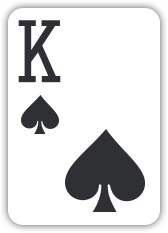 and the board shows
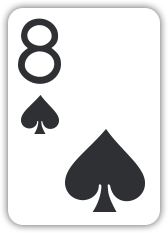


 :
:
- You CANNOT play the board's 7-8-9-10 run with one hole card — that would be four board cards; with you'd need a 6 or J, which you don't hold
- You CAN make a pair of 9s legally: (two hole) with (three board)
- Actually, using with gives you two pair (8s and 9s)
Strategy Tips
- Starting hands should work well together - suited cards and connected cards
- Look for hands that can make strong hands like straights and flushes
- Remember the mandatory two-hole-cards rule when reading the board
- Hand values are generally stronger in Omaha than Hold'em
- Position is still important
Omaha Variants
Omaha is the base game for a large family of variants — most of them keep the exact two-card rule and change the deal or the pot:
FAQ
How do you play Omaha poker?
Each player is dealt four hole cards. Five community cards are dealt in three stages — the flop, turn, and river — with a betting round at each. At showdown you make your best five-card hand using exactly two of your four hole cards and exactly three community cards.
Do you have to use two cards in Omaha?
Yes. Omaha requires you to use exactly two of your four hole cards plus exactly three community cards — no more, no fewer. You can never play one or zero hole cards as you can in Texas Hold'em.
What's the difference between Omaha and Texas Hold'em?
Omaha deals four hole cards instead of two and forces you to use exactly two of them with three board cards. Everything else — betting rounds, community cards, and hand rankings — is the same. Hands tend to run stronger in Omaha.
Can you play 6-card Omaha?
Yes. Six-Card Omaha deals six hole cards instead of four, but the two-card rule still applies — you use exactly two of your six. Five-Card Omaha, with five hole cards, is also common.
Is Omaha harder than Hold'em?
Omaha is more complex because four hole cards create far more possible combinations, and the exact-two-card rule trips up new players reading the board. The betting and rankings are identical to Hold'em, so the learning curve is mostly about hand reading.
